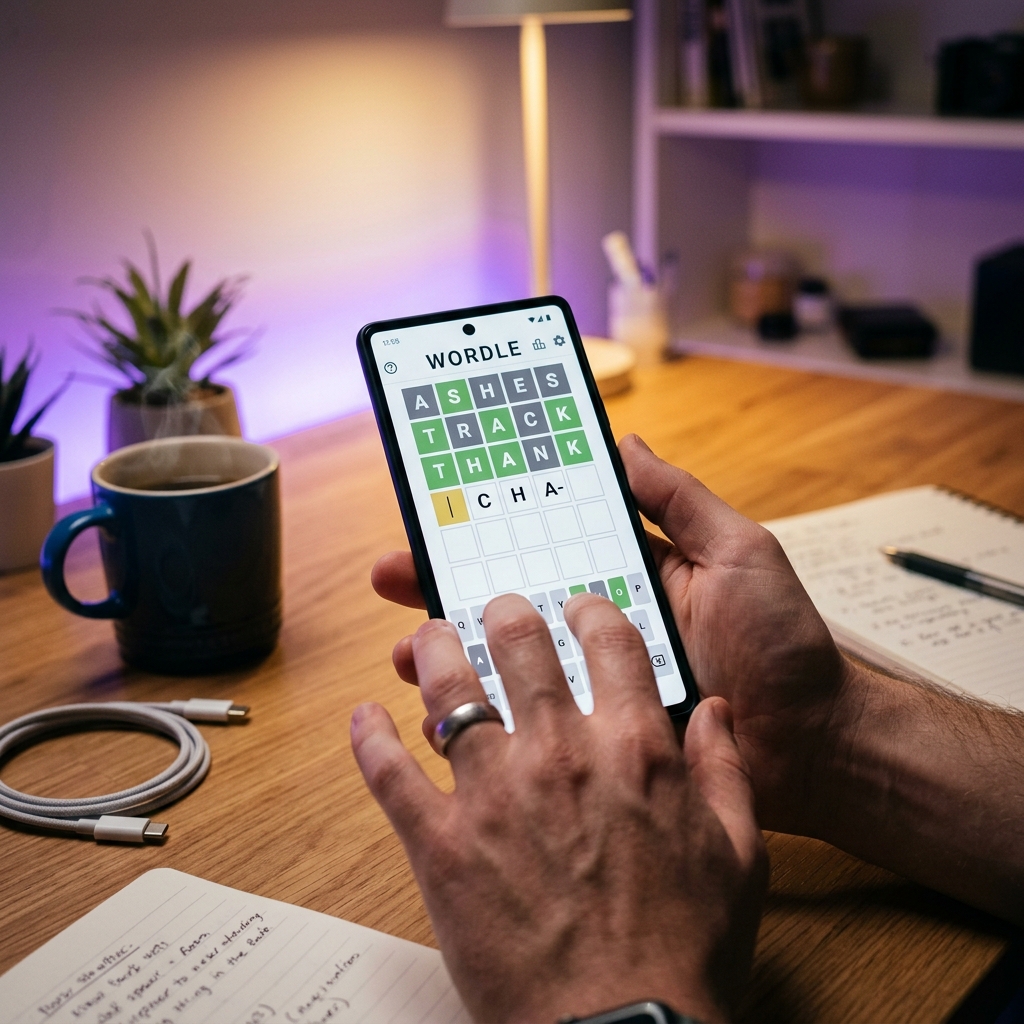
Guesses 1-3 are exploration. Guess 4 is where the real game begins. By now you've tested 12-15 letters, you have a patchwork of greens, yellows, and grays, and the pressure is building. Two guesses left to get it right.
Most Wordle guides focus on opening strategy — which starting word to use, how to maximize information early. But the endgame is where games are won and lost. A perfect opener means nothing if you can't close.
The Guess 4 Framework
By guess 4, you should know 3-4 letters. If you don't, your opening strategy needs work. But assuming you do, here's the decision tree:
Scenario A: 3+ Greens
You have most of the word locked. This is the best position — but also where careless players stumble by rushing. With 3 greens, there are typically 2-5 possible answers. Mentally list them:
Example: _IGHT with confirmed I,G,H,T. Options: LIGHT, MIGHT, NIGHT, RIGHT, SIGHT, TIGHT, WIGHT, FIGHT.
If 3 or fewer candidates: Go for the solve. Pick the most common word first. LIGHT > MIGHT > NIGHT > TIGHT in normal frequency.
If 4+ candidates: Consider an elimination guess. A word like FLINT tests F, L, N — potentially eliminating FIGHT, LIGHT, and NIGHT in one shot. Even though FLINT isn't the answer, the information it provides narrows your final guess to one option.
Scenario B: 2 Greens + 1-2 Yellows
You know some letters and their approximate positions but need to lock in the arrangement. This is the most common guess-4 scenario and the most dangerous.
Action: Focus on placement. You know WHICH letters are in the word; now you need WHERE. Try words that test your yellow letters in their remaining possible positions.
Scenario C: 1 Green or Fewer
You're in trouble. With limited positional confirmation by guess 4, you likely:
- Had a tough opening draw (rare letters in the answer)
- Used guesses inefficiently (reused eliminated letters, gaps in letter coverage)
- The answer has unusual letter patterns (double letters, rare combinations)
Action: Don't guess the answer yet. Use guess 4 to test the most common remaining letter combinations. You still have guesses 5 and 6 for solving.
The Guess 5 Pressure Cooker
Guess 5 is psychologically the hardest moment in Wordle. You have exactly two chances left. The natural reaction is to panic-guess — throw in a word that "feels right" without fully analyzing your constraints.
Fight this instinct. Instead:
- Breathe. Literally take a breath. The extra 5 seconds won't hurt your chances.
- Review all constraints. Green letters locked. Yellow letters: where CAN they go? Gray letters: confirmed absent.
- List candidates. Write them down if needed. How many words fit ALL your constraints?
- If 1-2 candidates: Go for the more common one.
- If 3+ candidates: Use guess 5 as elimination. Save guess 6 for the solve.
The Final Guess
Guess 6 is binary: you either know the answer or you don't. If you've been systematic through guesses 1-5, you've tested 20-25 of the 26 letters and narrowed positions significantly. The answer should be clear.
If it's NOT clear on guess 6, common culprits:
- Double letter you didn't consider — The answer has a repeated letter
- Uncommon word — CAULK, NYMPH, FJORD, PIQUE — words you know but wouldn't generate unprompted
- Position blindness — You know all the letters but can't arrange them correctly
Mental Models for Endgame
Model 1: The Sudoku Approach
Treat each position independently. For position 1, what letters are still possible? Position 2? This narrows candidates faster than thinking about whole words.
Model 2: The Rhyme Approach
When you have the ending locked (e.g., _OUND), mentally rhyme through: BOUND, FOUND, HOUND, MOUND, POUND, ROUND, SOUND, WOUND. Filter by your constraints.
Model 3: The Category Approach
If you have scattered letters, think about word categories. Is it a noun? Verb? Adjective? An action word starting with S? A thing ending in -ER? Category filtering reduces the cognitive load of scanning all 5-letter words.
How to Practice Endgame
In unlimited practice mode, deliberately put yourself in endgame situations:
- Play your normal opener
- Use a deliberately weak second guess (a word with uncommon letters)
- Now you're on guess 3 with minimal information — simulating a guess 4-5 endgame
- Practice solving from this disadvantaged position
Practice Your Endgame
Unlimited games let you deliberately practice pressure scenarios.
Practice Now