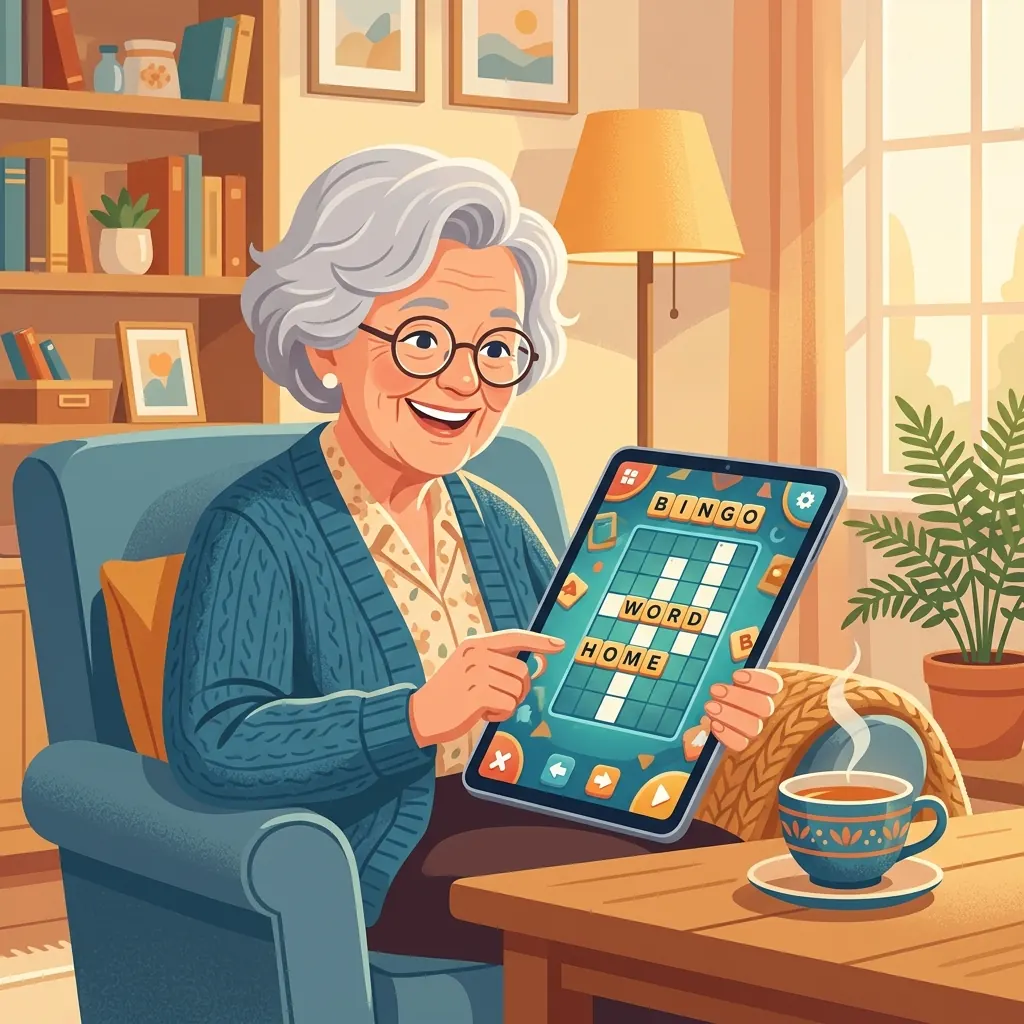
My mother is 72. She started playing Wordle in March 2022 after my sister showed her during a Sunday dinner. Two years later, she hasn't missed a single day. Her streak is at 780+ and counting. It's the first thing she does every morning after her tea.
"It's the first phone game that doesn't make me feel stupid," she told me. That sentence captures why Wordle works so beautifully for older adults.
Why Wordle Is Perfect for Older Adults
1. It's Short — 5 Minutes, Done
No hours-long gaming sessions. No story modes. No levels to grind. One puzzle per day, five minutes of focused thinking, and you're done. It respects your time and attention span.
2. It Uses Skills You Already Have
Wordle requires vocabulary and logical thinking — skills that actually improve with age. Unlike video games that require fast reflexes or spatial awareness, Wordle rewards experience. The more words you know (and older adults typically know more), the better you perform.
3. It's Proven Brain Exercise
Research published in the International Journal of Geriatric Psychiatry found that adults over 50 who regularly engaged in word puzzles had cognitive function equivalent to people 10 years younger. Wordle hits the same cognitive centers: working memory, vocabulary retrieval, and logical deduction.
4. It's Social Without Being Social Media
You can share your results with family and friends without creating social media accounts, posting photos, or navigating algorithms. The share grid is simple: "Look! I got it in 3 today!"
Getting Started: Step by Step
- Open your web browser — Safari on iPhone/iPad, Chrome on Android, or any browser on your computer
- Visit WordlyPlay.com/play — Bookmark this page for easy daily access
- Type a five-letter word — Any word you know. HOUSE, PLANT, SMILE — anything works as a first guess
- Read the colors:
- 🟩 Green = Right letter, right position
- 🟨 Yellow = Right letter, wrong position
- ⬜ Gray = Letter not in the word
- Use the clues to narrow down the word. You have 6 guesses total.
Tips Specifically for Older Adults
Don't Rush
There's no timer. Take as long as you need. Some players solve in 30 seconds; others take 10 minutes. Both are perfectly fine. The only goal is to enjoy the process.
Use the Same Starting Word Every Day
Choosing a starting word daily adds unnecessary decisions. Pick one word and use it every time. Good choices: HOUSE, CRANE, STARE, or TRAIN. Having a consistent starter removes the "what should I guess first?" anxiety.
Check the Keyboard
The on-screen keyboard shows which letters you've already tried. Gray keys are eliminated. This prevents accidentally reusing letters — a common mistake for beginners of any age.
It's Okay to Fail
Not every puzzle is solvable in 6 guesses. When you fail, the answer is revealed. Learn it, move on, and try again tomorrow. No penalty except a reset streak counter — and streaks start again immediately.
Cognitive Health Benefits
Daily word puzzles provide measurable cognitive benefits for older adults:
| Benefit | How Wordle Helps |
|---|---|
| Working memory | Holding multiple letter constraints while generating words |
| Vocabulary maintenance | Actively retrieving words from memory daily |
| Pattern recognition | Identifying letter patterns and word structures |
| Mental flexibility | Adjusting strategy based on new information each guess |
| Daily routine | Consistent cognitive engagement creates healthy habits |
A Family Connection
One of Wordle's unexpected gifts: it connects generations. Grandchildren can play the same puzzle as grandparents. The daily grid becomes a shared conversation piece — "How'd you do today?" text messages that bridge generational gaps.
If you're a family member of a senior, consider setting up a family Wordle group chat. Daily grid sharing gives everyone a reason to check in, and the light competition keeps things fun.
Start Your Daily Brain Exercise
Five minutes. One puzzle. A lifetime of cognitive benefits.
Play Your First Puzzle