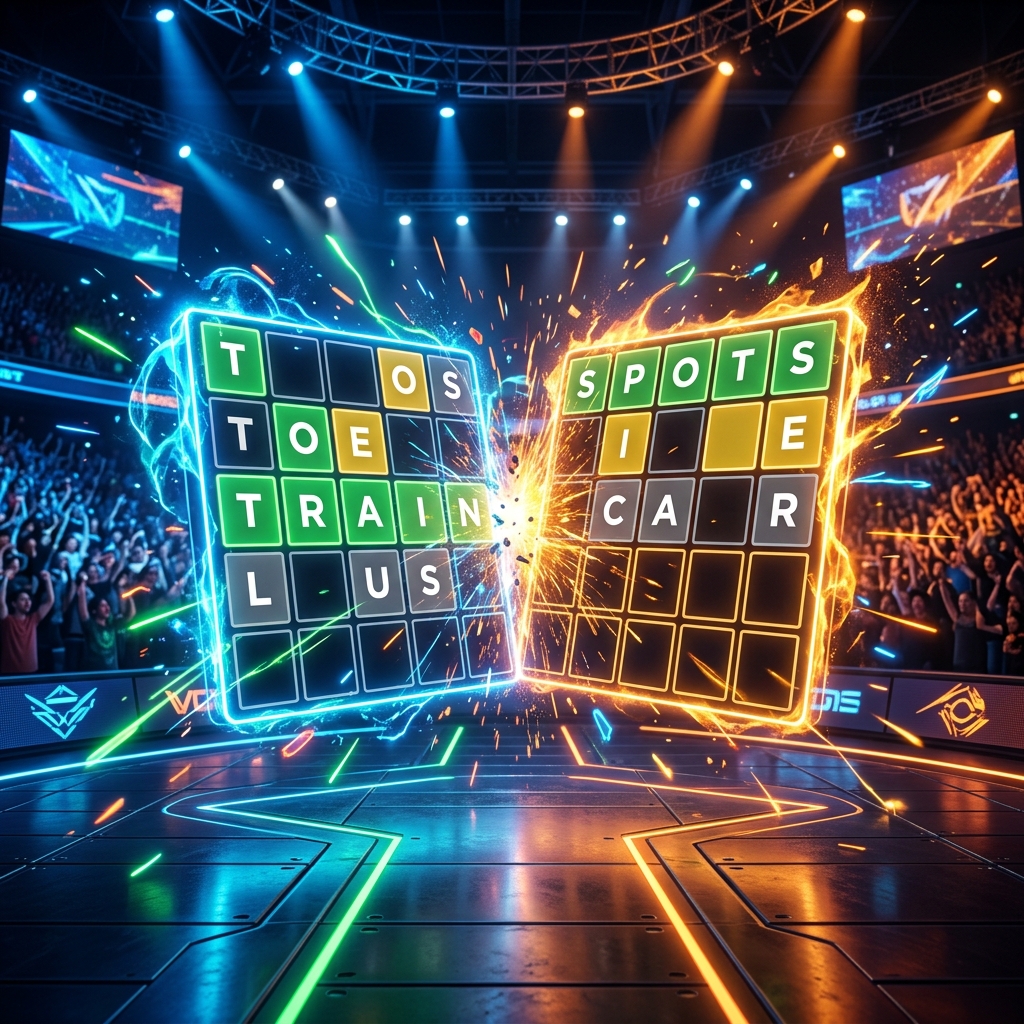
I solved Wordle in 2 guesses once. I felt clever for about 30 seconds. Then I moved on with my day. The experience was pleasant, forgettable — like a good cup of coffee.
Last week, I solved a competitive word duel in 3 guesses while my opponent was stuck on guess 5. I watched their timer tick down, knew they were panicking, and felt a surge of genuine competitive satisfaction. My hands were slightly sweating. I still remember the word: GROPE.
Same game. Same mechanics. Completely different experience. That difference — between solitaire satisfaction and competitive electricity — is why I believe head-to-head word battles are the next major evolution in word gaming.
What Changes When You Add an Opponent
Solo Wordle is a puzzle. Competitive Wordle is a sport. The mechanics are identical, but the psychology transforms completely:
| Element | Solo Wordle | Competitive Duel |
|---|---|---|
| Pressure source | Self-imposed | Real human opponent |
| Pace | Self-directed, no rush | Timer-driven urgency |
| Failure cost | Personal streak loss | Public loss to another person |
| Victory feeling | Quiet satisfaction | Genuine competitive triumph |
| Social element | Sharing results after | Real-time interaction during |
| Replay value | One per day (or unlimited solo) | Infinite — every opponent is different |
Why Word Games Are Perfect for Competition
Not every game benefits from head-to-head play. Crossword duels would be awkward (different solving paths, hard to compare). Sudoku races exist but feel forced. Wordle battles work uniquely well because of three structural advantages:
1. Shared Puzzle, Different Paths
Both players solve the exact same word. This makes the competition objectively fair — no "I got a harder word" excuse. But each player approaches the puzzle differently, creating divergent solving journeys from identical starting conditions. That divergence IS the competition.
2. Compressed Time Frame
A Wordle solve takes 2-5 minutes. A competitive match takes the same time. Compare this to chess (30-90 minutes), Scrabble (45-90 minutes), or even a game of basketball (48 minutes). Word battles are the espresso shot of competitive gaming — intense, fast, and immediately rewarding.
3. Accessible Skill Floor, High Skill Ceiling
Anyone who can play Wordle can play competitive Wordle. The rules don't change. But under pressure, against a real opponent, the gap between good and great players becomes dramatically visible. This is the hallmark of every great competitive game: easy to learn, hard to master.
How Battle Strategy Differs from Solo Strategy
Competitive play demands different decisions than solo play:
Speed vs. Accuracy Trade-off
In solo Wordle, there's no benefit to solving in 30 seconds vs. 3 minutes — your final guess count is all that matters. In battles, speed IS a factor. Solving in fewer guesses matters, but solving FASTER with the same guess count also matters.
This creates a genuine dilemma: do you take 15 extra seconds to find the optimal second guess, or do you type a "good enough" guess quickly to maintain pace? The answer depends on your opponent's skill level, your risk tolerance, and the stakes.
The Bluff Factor
In some battle formats, you can see your opponent's progress (how many guesses they've used, maybe their color results). This adds a meta-game: if your opponent has three greens after two guesses, you know they're close to solving. The pressure to match their pace can cause you to rush and make mistakes — or motivate you to find a brilliant shortcut.
Consistency Over Brilliance
In a best-of-5 match, one lucky 2-guess solve doesn't win the series. Consistent 3-guess execution across all five rounds beats a player who alternates between 2-guess miracles and 5-guess struggles. This rewards practiced fundamentals over flashy gambles.
The Growing Battle Community
Competitive word gaming is still in its early days, but the community is growing fast. On WordlyPlay, battle mode has become the most-played feature, with players returning daily for ranked matches and friend challenges.
What makes the community special:
- Post-match analysis — Players compare solving paths after matches, learning from each other
- Friendly rivalries — Regular opponents develop ongoing competitions tracked over weeks
- Skill development — Players improve faster in competitive mode because each match provides immediate comparative feedback
How to Start Competing
- Build your solo skills first — Get comfortable with a 3.5 or lower average before entering battles
- Play practice battles — Start with unranked matches on WordlyPlay to experience the pressure without consequences
- Focus on consistency — Winning battles isn't about brilliant guesses; it's about never wasting a guess
- Learn to type your opener instantly — In battles, the 2 seconds you save on guess 1 compound into a meaningful speed advantage
Ready to Compete?
Challenge friends or match with random opponents in real-time word battles.
Start a Word Battle