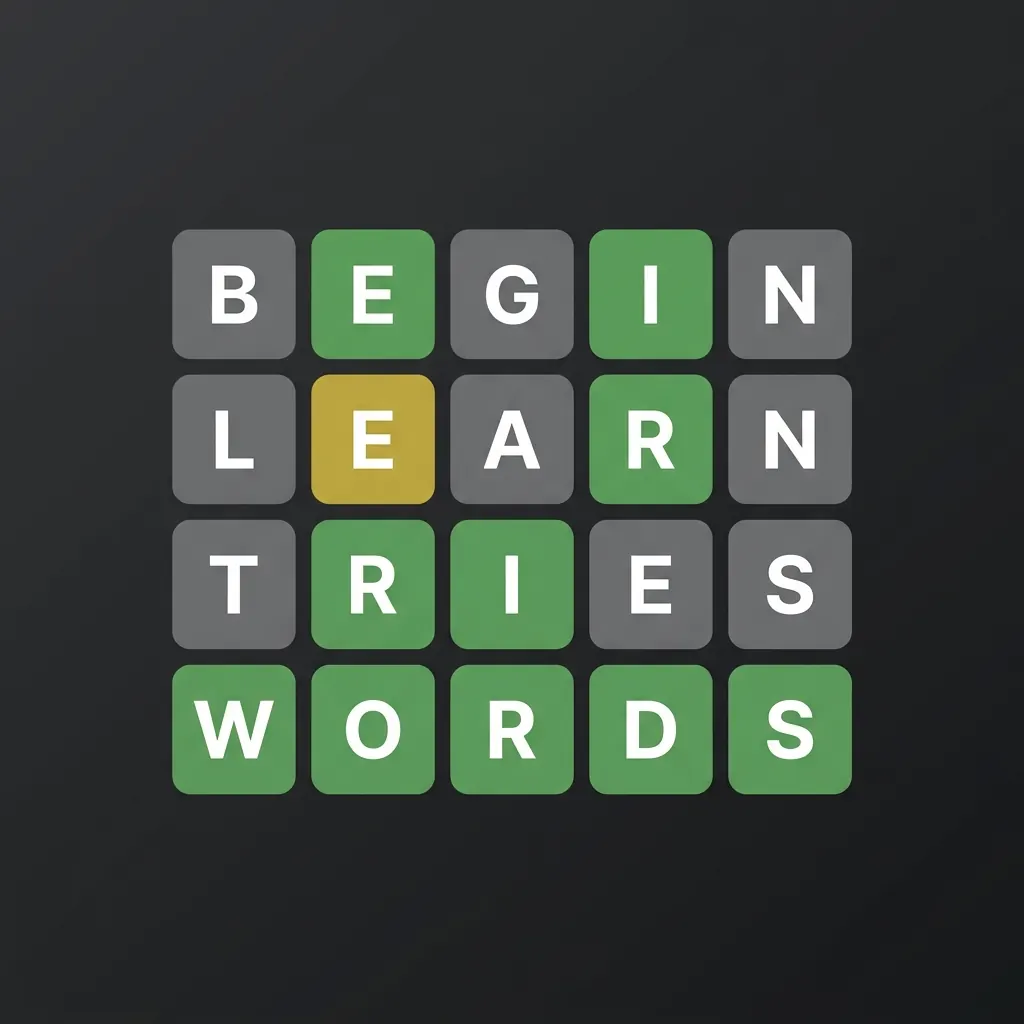
If you've heard friends buzzing about Wordle and wondered what all the fuss is about, you're in the right place. I started playing Wordle back in early 2022 when a colleague shared a mysterious grid of green and yellow squares on Twitter. Three years later, I'm still hooked — and I've helped hundreds of people go from confused beginners to confident players.
In this guide, I'll walk you through everything you need to know to start playing Wordle, understand its mechanics, and develop strategies that actually work. No jargon, no fluff — just clear, practical advice.
What Is Wordle, Exactly?
Wordle is a word puzzle game where you have six attempts to guess a five-letter word. After each guess, the game tells you which letters are correct and in the right position, which letters are in the word but in the wrong spot, and which letters aren't in the word at all.
Originally created by software engineer Josh Wardle (yes, the name is a pun) for his word-loving partner, Wordle exploded in popularity in late 2021. The New York Times acquired it in January 2022 for a reported seven figures.
Understanding the Color Codes
This is the most important thing to learn as a new player. After each guess, every letter in your word gets color-coded:
| Color | Meaning | What to Do |
|---|---|---|
| 🟩 Green | Correct letter, correct position | Keep it locked in that spot |
| 🟨 Yellow | Correct letter, wrong position | Move it to a different spot |
| ⬜ Gray | Letter is not in the word | Don't use this letter again |
Let me give you a concrete example. Say the target word is CRANE and your first guess is STEAM:
- S → Gray (not in the word)
- T → Gray (not in the word)
- E → Yellow (in the word, but not position 3)
- A → Yellow (in the word, but not position 4)
- M → Gray (not in the word)
Now you know E and A are in the answer, but S, T, and M aren't. Your next guess should use E and A in different positions while testing new consonants.
How to Play: Step-by-Step
Step 1: Type Your First Guess
Type any valid five-letter English word using your keyboard. This is your starting word — and choosing a good one matters more than you'd think (more on this below).
Step 2: Read the Feedback
After pressing Enter, each letter changes color. Take a moment to process what each color tells you. Don't rush — the information is valuable.
Step 3: Refine Your Next Guess
Using the clues, make a smarter second guess. Keep green letters in place, move yellow letters to new positions, and avoid gray letters entirely.
Step 4: Repeat Until Solved
Continue refining with each guess. Most experienced players solve the puzzle in 3-4 attempts on average.
The Best Starting Words (Backed by Data)
Your first guess sets the tone for the entire puzzle. A good starting word should contain common letters and no repeated letters. Here are the top choices based on letter frequency analysis:
| Starting Word | Why It Works | Common Letters Hit |
|---|---|---|
| CRANE | Covers top vowels + R, N | C, R, A, N, E |
| SLATE | Strong consonant coverage | S, L, A, T, E |
| AUDIO | Tests 4 vowels at once | A, U, D, I, O |
| RAISE | Top pick per NYT analysis | R, A, I, S, E |
| STARE | High probability letters | S, T, A, R, E |
5 Common Beginner Mistakes (And How to Avoid Them)
After coaching newcomers for years, I see the same patterns over and over:
- Ignoring gray letters — When a letter turns gray, it's eliminated from all positions. Use the on-screen keyboard tracker!
- Not moving yellow letters — A yellow letter must go to a different position. Many beginners leave it where it was.
- Using rare letters early — Don't start with words like XYLOL or QUEUE. Common letters first.
- Rushing through guesses — Take 30 seconds to think between each guess. Strategy beats speed.
- Reusing eliminated letters — Always check the keyboard highlights before guessing.
3 Proven Strategies for Faster Solving
Strategy 1: The Vowel Scanner
Use your first guess to test as many vowels as possible. Words like ADIEU or AUDIO reveal which vowels are in play, dramatically narrowing your options.
Strategy 2: The Consonant Eliminator
Pick starting words heavy on common consonants: S, T, R, N, L. Words like STERN or SNARE quickly eliminate or confirm the most likely consonants.
Strategy 3: The Position Lock
Once you have green letters, build around them. If you know position 3 is "A," think of all five-letter words with A in the middle and narrow from there.
Daily Wordle vs. Unlimited Practice
The official New York Times Wordle gives you one puzzle per day — that's it. If you want to practice more and sharpen your skills, unlimited Wordle games let you play as many rounds as you want. It's the fastest way to improve because repetition builds pattern recognition.
Ready to Start Playing?
Jump into unlimited Wordle puzzles — no account needed, completely free.
Play Wordle Now — FreeFrequently Asked Questions
Yes! The original Wordle on the New York Times website is free. Unlimited Wordle games on platforms like WordlyPlay are also completely free with no account required.
You get six guesses to find the correct five-letter word. If you can't solve it in six tries, the correct answer is revealed.
Data analysis suggests CRANE, SLATE, or RAISE are among the best starting words because they contain the most common letters in English five-letter words.
The official NYT Wordle is limited to one puzzle per day. However, platforms like WordlyPlay offer unlimited games so you can practice as much as you want.