Every game developer worries about retention. You can build the best puzzle engine in the world, but if players stop opening the app after two weeks, it doesn't matter. The question that kept us up at night during development was: "Why would someone play WordlyPlay instead of just doing Wordle?"
The answer, it turned out, wasn't about puzzles at all. It was about people.
What the Data Shows
We track retention anonymously (no personal data — just aggregate patterns). What the numbers reveal is striking:
- Players who only play solo have a 30-day retention rate of about 25%
- Players who battle at least once have a 30-day retention of about 55%
- Players who add at least one friend have a 30-day retention of about 70%
- Players who have an active rivalry (battle the same friend 3+ times) have a 30-day retention of about 85%
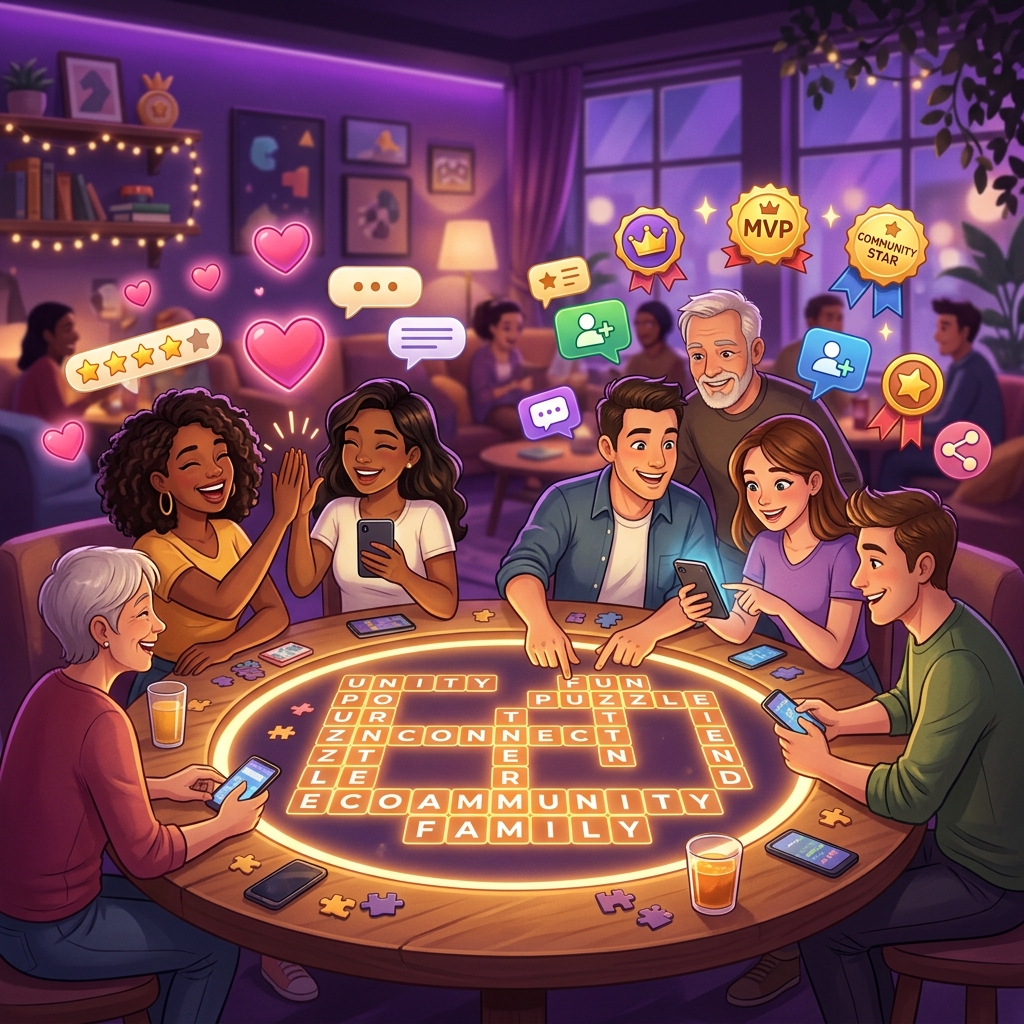
The pattern is clear: social connections predict retention more reliably than any single game feature. A player with three friends who battle regularly is roughly 3x more likely to be playing next month than a solo player.
The Rivalry Effect
The most powerful retention mechanic in WordlyPlay isn't something we designed—it emerged organically. Players who regularly battle the same friend develop a sense of rivalry that becomes self-sustaining. "I can't let Maria keep her winning streak against me. I need to practise and challenge her again this weekend."
Rivalry creates intrinsic motivation that no notification, reward, or gamification can match. When your personal record against a specific friend matters to you, you don't need us to send you push notifications. You open the app because you want to.
Streak Psychology
Daily streaks work because they transform a one-time decision ("should I play today?") into an identity statement ("I'm the kind of person who plays every day"). Once a streak reaches 20-30 days, breaking it feels like losing something valuable — which is exactly the loss aversion that keeps people consistent.
We're aware this is a psychological lever, which is why we built the Streak Shield as a safety valve. We want streaks to motivate, not stress. If a streak ever feels like an obligation rather than a joy, a player should feel free to let it reset.
The Sharing Loop
The sharing mechanic creates a virtuous cycle:
- Player shares their result grid in a group chat
- Friends see the grid and get curious ("I want to try that word")
- Some friends sign up (referral gems for the sharer)
- New players eventually share their own results
- The cycle repeats
This loop is self-reinforcing. We pay gems to accelerate it, but the core motivation — wanting to share a proud moment with friends — is genuine.
Our Community Philosophy
We made a deliberate choice early on: no dark patterns. No FOMO-driven limited-time offers. No pay-to-win mechanics. No manipulative notifications designed to guilt you into playing.
Our retention strategy is simply: make the game good enough that people want to come back, and give them friends to come back to. If a player stops playing because they're bored, that's our failure to make the game interesting — not a justification for more aggressive monetisation.
The social features — friends, battles, sharing, referrals — work because they connect real people around a shared activity. That connection is more durable than any reward loop.