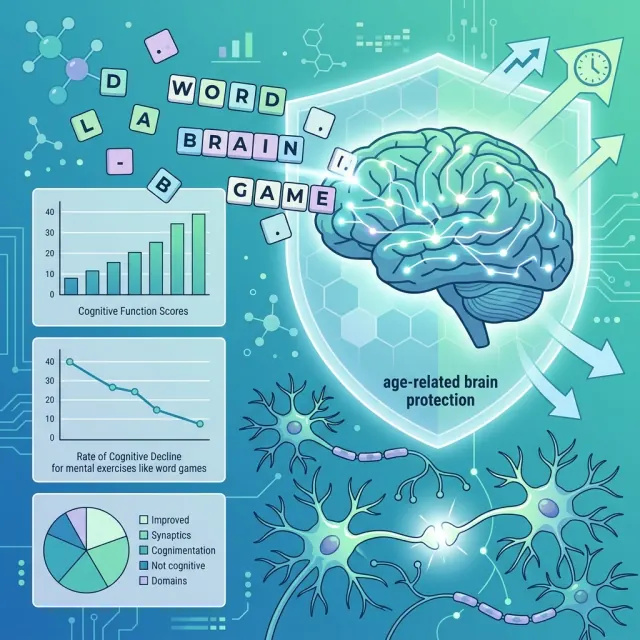
Word Games and the Aging Brain: What Research Actually Shows
Headlines claim "puzzles prevent dementia!" The reality is more nuanced. Here's what peer-reviewed research actually says about word games and cognitive aging.
Category
Brain health, cognitive benefits, and research
Headlines claim "puzzles prevent dementia!" The reality is more nuanced. Here's what peer-reviewed research actually says about word games and cognitive aging.

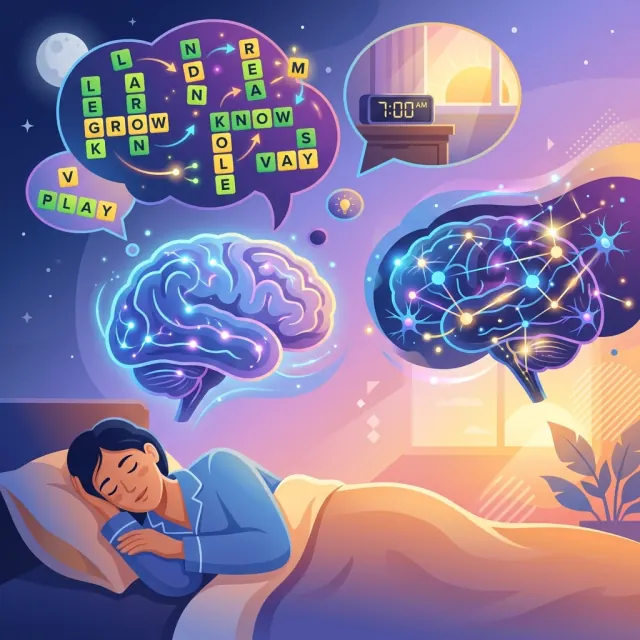
Your Wordle score might depend more on last night's sleep than your strategy. Here's what cognitive science says about sleep and puzzle performance.
Neuroscience research confirms what puzzle enthusiasts have always felt: daily word puzzles measurably improve memory and attention span. Here's the evidence.
Wordle isn't just entertainment — neuroscience shows daily word puzzles strengthen memory, boost problem-solving, and may even protect against cognitive decline.
Behavioral psychologists have identified exactly why Wordle is uniquely addictive. The answer involves scarcity, social proof, completion bias, and a principle from croissants.